
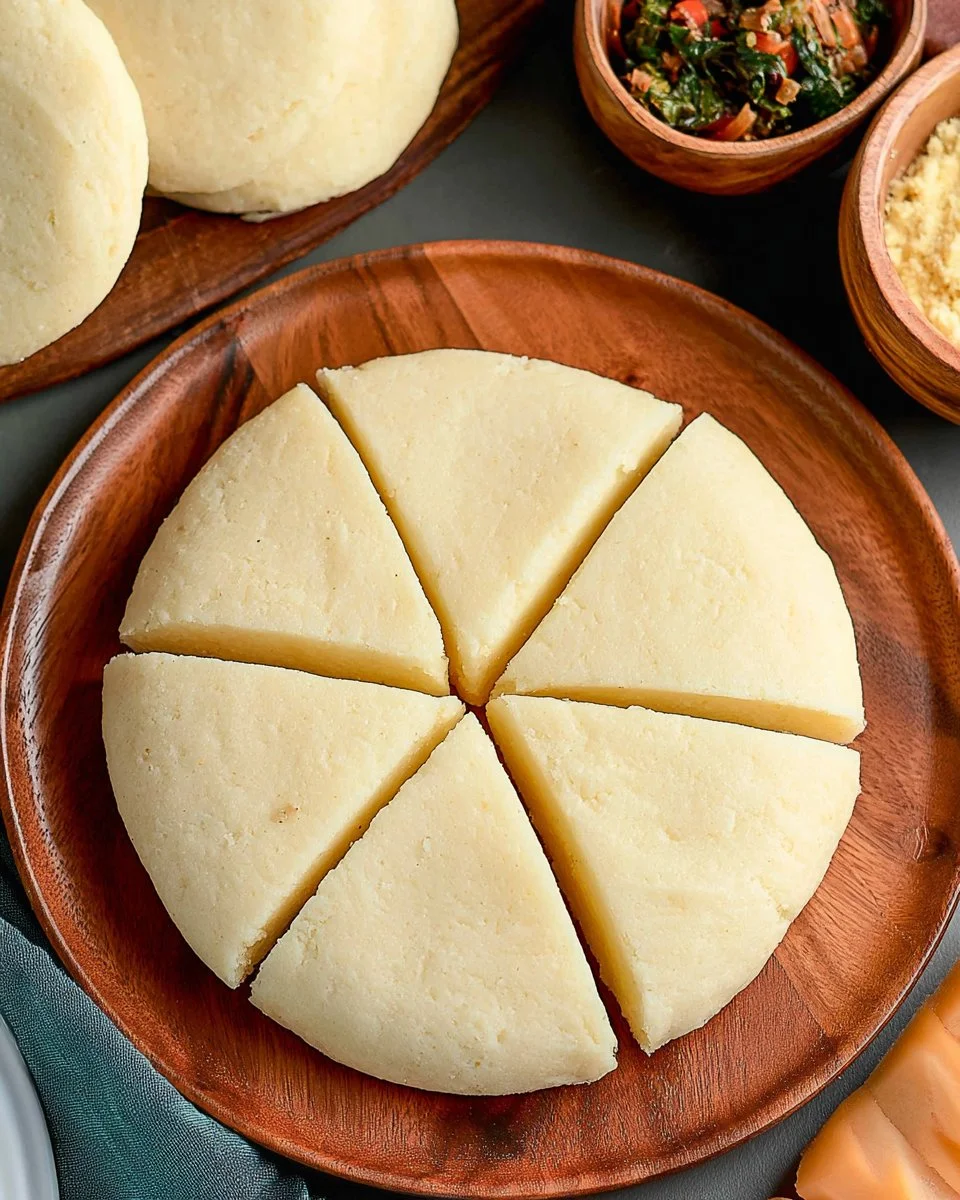
If you’re craving a staple dish that embodies comfort and simplicity, ugali is the way to go. This traditional Kenyan cornmeal dish is not only easy to prepare, but it also offers a delightful blend of flavors and textures that can complement a variety of meals. Imagine a warm, creamy base that pairs beautifully with stews and vegetables, making each bite a perfect harmony of taste and satisfaction.
Ugali’s texture is firm yet tender, giving you that satisfying bite while being simple to scoop up with your favorite sauces. The addition of vegan butter adds a lovely richness that enhances the overall experience, making it not just a side dish, but a meal component that everyone will enjoy. Whether you’re serving it alongside sukuma wiki or your favorite curry, ugali is a versatile and nourishing choice that deserves a spot on your dinner table.
So, are you ready to dive into the world of ugali? It’s incredibly straightforward to make and perfect for any gathering. Let’s get started!
Quick Answer
This ugali recipe is an easy method to create a delicious Kenyan cornmeal dish that complements various meals.
Why You’ll Love This Recipe
Ugali is beloved for its simplicity and versatility, making it a staple in many households. Here’s why you’ll adore this recipe:
- Comforting texture that’s easy to scoop and enjoy.
- Quick preparation time, perfect for busy weeknights.
- Made with just a few pantry essentials.
- Pairs wonderfully with a variety of stews or curries.
- A great source of carbohydrates for energy and satisfaction.
- Completely vegan-friendly and wholesome.
- An authentic taste of Kenyan cuisine in your own kitchen.
What Makes This Recipe Special
This ugali recipe stands out due to its authentic preparation method, which has been passed down through generations. The use of fine white cornmeal gives it that smooth texture and unique flavor profile that distinguishes it from other similar dishes. The addition of salt and vegan butter elevates the basic cornmeal to a comforting staple that resonates with warmth and home-cooked goodness. This dish not only provides a filling base to your meals, but it also allows for creative pairing with various dishes, enhancing its adaptability to different culinary experiences.
Kitchen Tools You’ll Need
- Medium pot – Ideal for boiling the water and cooking the ugali.
- Whisk – Helps to mix the cornmeal into the boiling water smoothly.
- Wooden spoon – Perfect for stirring the ugali once it thickens.
- Measuring cups – Necessary for accurate ingredient quantities.
- Serving dish – For presenting your ugali beautifully.
Ingredients
water: The base liquid that creates the perfect consistency for ugali.
salt: Enhances flavor while balancing the taste of the cornmeal.
vegan butter: Adds richness and a creamy mouthfeel to the dish.
fine white cornmeal: The main ingredient that provides the structure and texture of ugali.
Ready to cook? Scroll to the recipe card below for exact measurements.
How to Make Ugali Recipe – Easy Kenyan Cornmeal
Phase 1 – Prep
STEP 1. Boil water. In a medium sized pot, bring the water to a boil.
STEP 2. Add salt. Once boiling, add the salt and reduce the heat to medium-low.
STEP 3. Melt vegan butter. Add the vegan butter and stir until melted.
Phase 2 – Cook
STEP 4. Add cornmeal. Starting with a whisk, very slowly and gradually pour the cornmeal into the water, whisking constantly.
STEP 5. Switch utensils. When it becomes too hard to whisk, switch to a wooden spoon.
STEP 6. Stir and cook. Stir and cook the ugali for about 5 minutes, scraping along the sides and bottom of the pot.
STEP 7. Press ugali. Press the ugali against the side of the pot with your spoon to press out any lumps.
STEP 8. Check for doneness. After 5 minutes, the ugali should start pulling away from the sides of the pot and holding its shape.
STEP 9. Rest the ugali. Let it rest and cook for an additional 1-2 minutes.
STEP 10. Remove from heat. Remove the pot from the heat and keep warm until serving.
Phase 3 – Serve
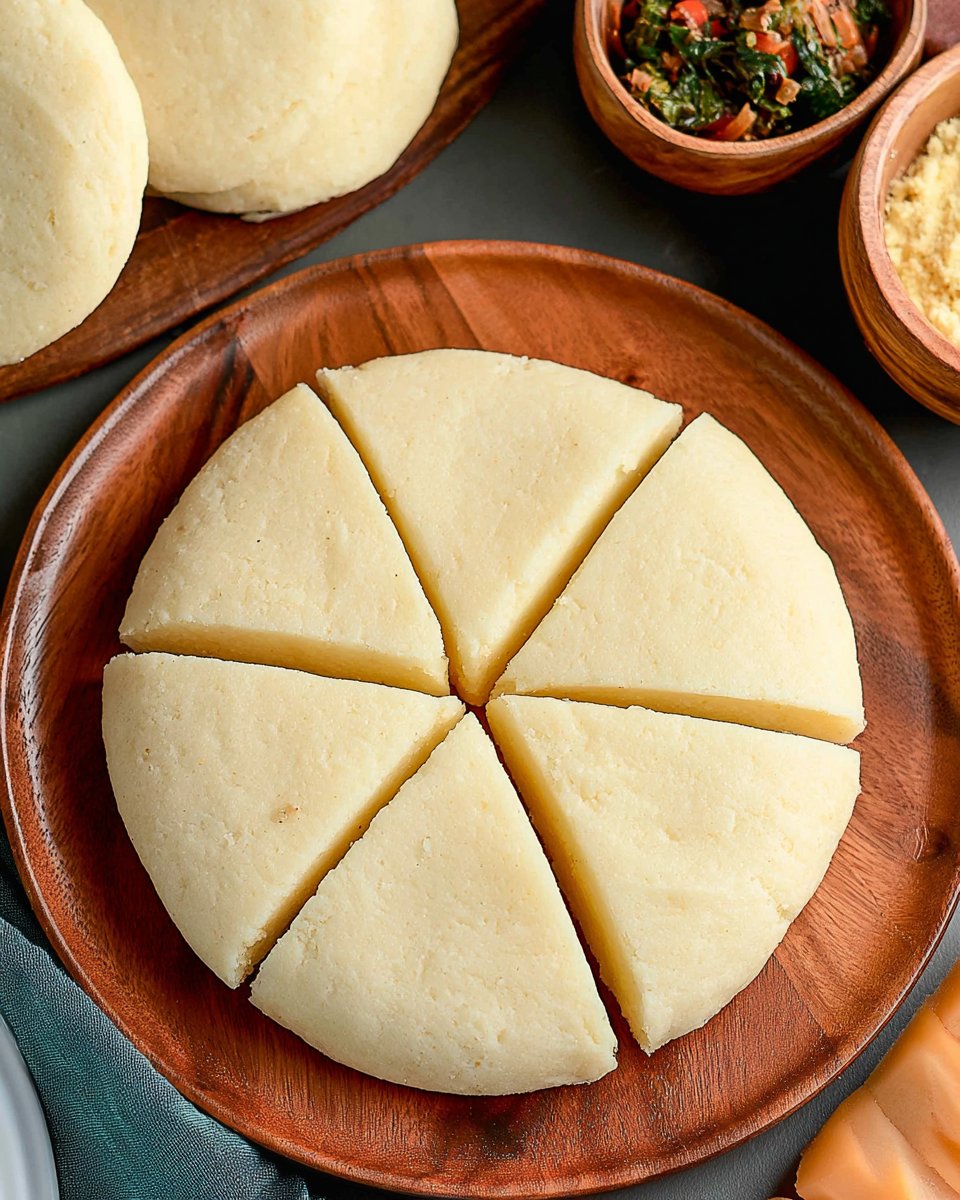
STEP 11. Form ugali. Form the ugali into a disc or roll into a cylinder, then slice or scoop for serving.
STEP 12. Pair with sides. Serve alongside sukuma wiki or any stew or curry.
Why This Recipe Works
The balance of textures in this ugali recipe is a standout feature. The smooth blend of finely ground cornmeal creates a comforting, creamy consistency, while the addition of salt and vegan butter imparts a rich flavor that complements a wide range of dishes. As the mixture thickens and cooks, it develops a hearty structure that holds well when served with a variety of stews and vegetables. The cooking method—steaming and stirring—ensures even heat distribution, allowing the ugali to become tender yet firm, making every bite incredibly satisfying.
Pro Tips
To achieve the perfect ugali, here are some expert tips:
- Make sure your water is at a rolling boil before adding the salt and cornmeal, as this helps in achieving the right texture.
- Stir consistently to prevent lumps from forming; a whisk is your best friend during the initial mixing.
- Use a wooden spoon to break up any lumps if they form after switching from the whisk.
- Let the ugali rest for those extra minutes at the end for the best texture.
- Experiment with the shape; rolling or shaping it differently can change the way it pairs with your main dish!
Common Mistakes to Avoid
Here are some common pitfalls to watch for when making ugali:
- Mistake: Adding cornmeal too quickly.
- Why it happens: Rushing the process can lead to lumps in the ugali.
- How to fix it: Gradually pour the cornmeal while whisking continuously.
- Mistake: Insufficient cooking time.
- Why it happens: Not allowing the ugali to steam properly may result in a soggy texture.
- How to fix it: Ensure you cook for the full time and let it rest afterwards.
- Mistake: Using coarse cornmeal.
- Why it happens: Coarse varieties don’t provide the desired smooth texture.
- How to fix it: Stick to fine white cornmeal for best results.
Variations
- Try adding herbs or spices to the water for extra flavor.
- Substitute with different types of cornmeal to experiment with textures.
- Pair with different vegetable sides like sautéed greens or veggie stews.
- Incorporate cooked vegetables into the ugali by mixing them in before serving.
- Top with your favorite sauces for a unique twist.
Nutrition Highlights
| Nutrient | Role |
|---|---|
| Complex Carbohydrates | Provides sustained energy and supports overall nutrition goals. |
| Vitamins | Essential for maintaining overall health and vitality. |
| Fibre | Aids digestion and supports a balanced diet. |
Serving Ideas
Ugali can be enjoyed in many ways. It pairs excellently with a traditional Sukuma Wiki (sautéed greens), flavorful stews, or even grilled vegetables. For a unique experience, consider serving it alongside rich curries or made into small balls that can be dipped into sauces. Its neutral flavor makes it an ideal companion to almost any dish, allowing you to get creative with your meals.
Best Occasions for This Recipe
This comforting ugali recipe is perfect for family gatherings, casual dinners, or potlucks. It’s a staple food that can easily satisfy a crowd, pleasing both adults and children alike. Whether you’re cooking for a special occasion or just a regular meal at home, ugali is sure to impress with its delightful taste and texture.
Meal Prep & Storage
Meal Prep
Ugali can be prepped quickly, making it a great option for meal planning. Prepare it ahead and store it in your refrigerator for later use. It’s best enjoyed fresh, but can still be reheated.
Refrigeration
Store leftover ugali in an airtight container in the fridge for up to three days. Reheating is simple, but you may want to add a splash of water to restore moisture.
Freezing
For longer storage, ugali can be frozen in portions. Wrap it well in plastic wrap and then transfer it to a freezer-safe bag. It can last for up to three months in the freezer.
Reheating
Reheat frozen ugali slowly in a pot over low heat, adding a little water to maintain its moisture. Alternatively, you can microwave it wrapped in a damp paper towel for a few minutes until warm.
FAQs
Can I use different types of cornmeal?
Yes, while fine white cornmeal is traditional, you can experiment with different types for varied textures.
How can I store leftover ugali?
Store it in an airtight container in the refrigerator for up to three days or freeze for longer storage.
What dishes pair well with ugali?
Ugali pairs well with vegetables, stews, and sauces, making it versatile in many cuisines.
Can I make ugali without vegan butter?
Yes, you can omit the vegan butter or replace it with another fat if desired.
How do I fix lumpy ugali?
If your ugali is lumpy, stir vigorously while cooking to break up lumps, or add a little more water and continue mixing.
Save This Recipe for Later
If you enjoyed this ugali recipe, be sure to save it to your Pinterest board for easy access later. It’s a must-try for anyone looking to experience authentic Kenyan cuisine!
Conclusion
Ugali is a remarkable dish that showcases the beauty of simple ingredients coming together in a satisfying way. Whether you’re enjoying it as part of a family meal or serving it at a gathering, its comforting texture and flavor will surely leave a lasting impression. Give this easy recipe a try, and discover the joy of making ugali in your own kitchen!
Ugali
Ingredients
Method
- In a medium sized pot, bring the water to a boil.
- Once boiling, add the salt and reduce the heat to medium-low.
- Add the vegan butter and stir until melted.
- Very slowly and gradually pour the cornmeal into the water, whisking constantly.
- When it becomes too hard to whisk, switch to a wooden spoon.
- Stir and cook the ugali for about 5 minutes, scraping along the sides and bottom of the pot.
- Press the ugali against the side of the pot with your spoon to press out any lumps.
- After 5 minutes, the ugali should start pulling away from the sides of the pot and holding its shape.
- Let it rest and cook for an additional 1-2 minutes.
- Remove the pot from the heat and keep warm until serving.
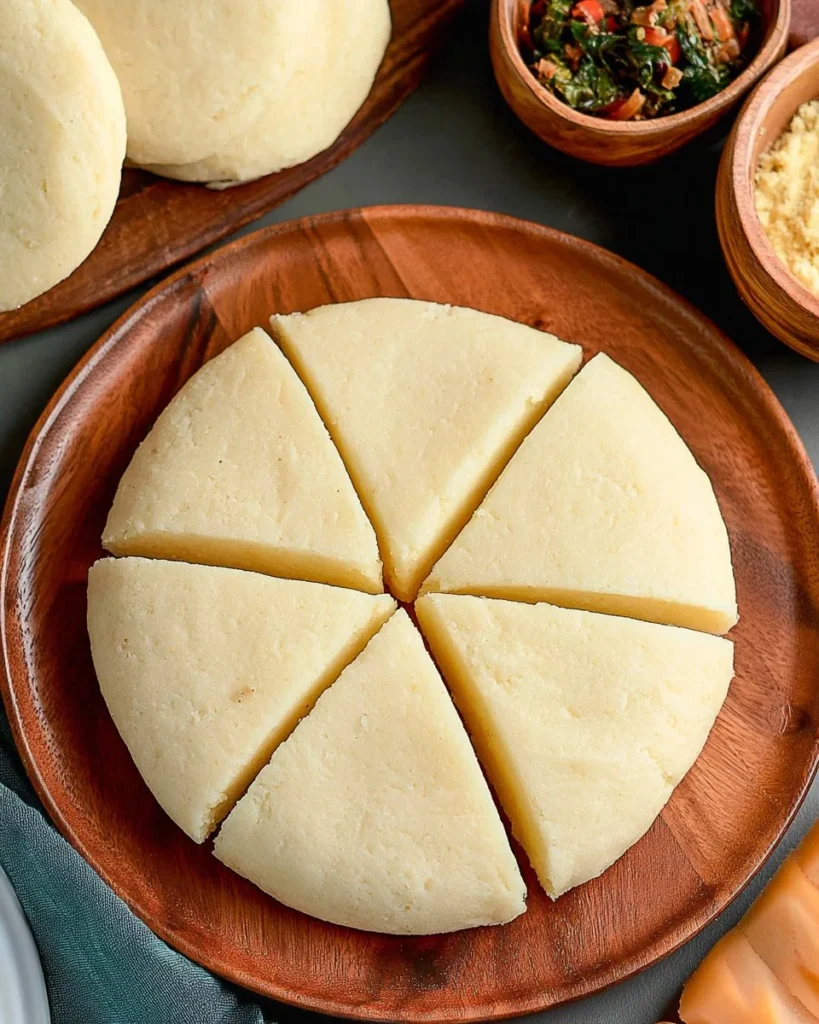
- Form the ugali into a disc or roll into a cylinder, then slice or scoop for serving.
- Serve alongside sukuma wiki or any stew or curry.